Choosing commercial solar is not simply a matter of comparing panel prices. It is a practical decision involving electricity demand, roof conditions, operating hours, and future expansion. If you are asking, “How to choose a solar system for my business,” begin with your actual energy data. A twelve-month utility record is more useful than a sales brochure. It shows seasonal peaks, demand charges, and wasted daytime capacity.
Fatih Birol, Executive Director of the International Energy Agency, said, “Solar is going to become the new king of the world’s electricity markets.” His observation highlights solar’s growing importance, but businesses still need careful planning. A warehouse with a broad, unshaded roof may suit a large rooftop system. A small restaurant may need a smaller array, battery storage, or better load management. The right answer depends on operations, not fashion.
This guide will examine panel efficiency, inverter quality, battery value, installation experience, warranties, and total ownership cost. It will also consider local sunlight, roof structure, maintenance access, and future electricity prices. Do not trust one attractive payback figure. It can ignore roof repairs, changing tariffs, or reduced output over time. That is where many decisions become less certain.
A good system should support the business without creating new operational problems. Ask installers for production estimates, equipment datasheets, monitoring examples, and references from similar companies. Check the assumptions behind every calculation. No checklist is flawless. Your energy profile may change next year. Careful questioning, independent verification, and honest planning can still lead to a reliable solar investment.
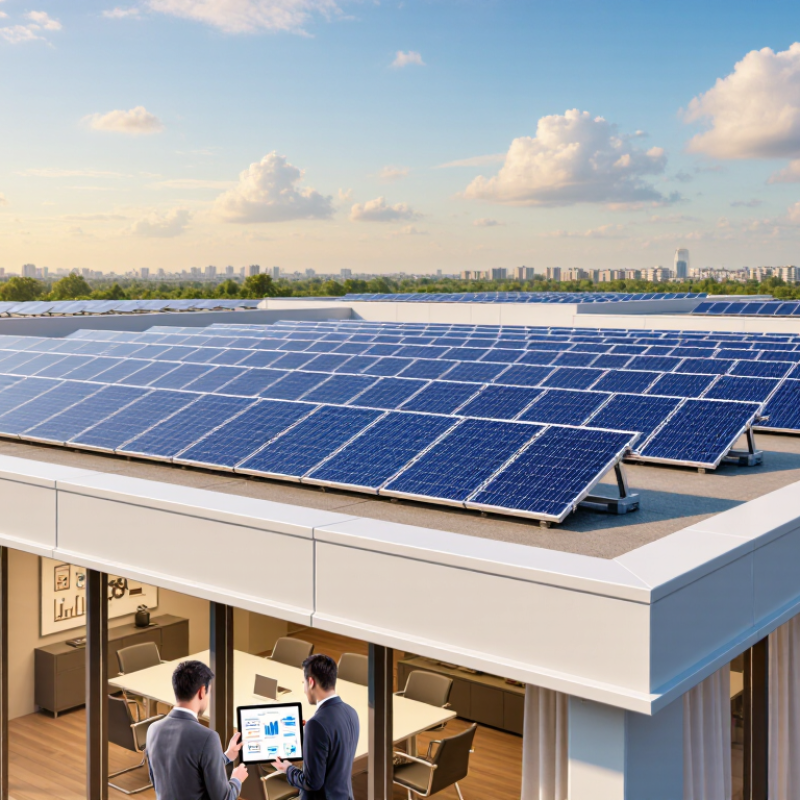
Before comparing solar equipment, define what your business needs to achieve. Review twelve months of electricity bills, preferably with 15-minute interval data. Note seasonal peaks, demand charges, operating hours, and critical equipment. A bakery may need steady morning power, while a warehouse may consume more energy after sunset.
The International Energy Agency reports that solar photovoltaics could provide nearly three-quarters of new renewable capacity added globally through 2028 (Renewables 2023). That growth does not make every system suitable. Compare your daytime load with available roof or ground space. Check shading at 9 a.m., noon, and 3 p.m. Small shadows can reduce output more than expected. Roof age matters too.
Set measurable goals: lower annual bills, reduce peak demand, protect essential operations, or cut emissions. If outages are a concern, evaluate battery storage separately from the solar array. Batteries may improve resilience, but their value depends on outage duration, tariff rules, and replacement planning. IRENA recorded 345 gigawatts of new solar capacity worldwide in 2023 (Renewable Capacity Statistics 2024). Yet global figures cannot predict your site’s production. Local weather data, utility export limits, and interconnection delays can change the result. My imperfect assumption would be treating annual energy savings as the main success measure. A system that saves money but cannot support refrigeration during an outage may miss the real business goal.
| Business Energy Profile | Typical Annual Electricity Use | Typical Peak Demand | Primary Load Schedule | Recommended Solar Capacity | Estimated Annual Solar Generation | Battery Storage Guidance | Best-Fit Solar Goal |
|---|---|---|---|---|---|---|---|
| Small Office | 30,000–75,000 kWh | 15–40 kW | Weekdays, mainly 8:00 a.m.–6:00 p.m. | 20–50 kW DC | 24,000–75,000 kWh per year | Usually optional; consider 20–60 kWh for backup or evening load shifting. | Reduce daytime grid purchases and improve energy-cost predictability. |
| Retail Store | 75,000–250,000 kWh | 40–120 kW | Daily operating hours, with lighting and cooling often concentrated during the day. | 50–150 kW DC | 60,000–225,000 kWh per year | Useful when evening operations, demand charges, or short outages are important; typically 50–200 kWh. | Offset daytime consumption while managing demand-related charges. |
| Restaurant or Food Service Site | 120,000–400,000 kWh | 60–200 kW | Long operating hours; refrigeration may run continuously and cooking loads can peak at meal times. | 80–250 kW DC | 96,000–375,000 kWh per year | Consider 100–300 kWh if refrigeration, point-of-sale systems, or safety equipment require continuity. | Lower operating costs and protect critical refrigeration loads. |
| Warehouse or Distribution Facility | 150,000–700,000 kWh | 75–350 kW | Daytime operations, with lighting, ventilation, conveyors, and charging equipment varying by shift. | 100–450 kW DC | 120,000–675,000 kWh per year | Evaluate 100–500 kWh when forklifts, automated equipment, or multiple shifts create evening demand. | Maximize roof utilization and reduce daytime energy and demand costs. |
| Manufacturing Facility | 500,000–5,000,000 kWh | 250 kW–3 MW | One to three shifts; large motors and process equipment may operate continuously. | 300 kW–3 MW DC | 360,000–4,500,000 kWh per year | Conduct a detailed load study; storage may range from 250 kWh to several MWh depending on demand and backup goals. | Reduce high-cost demand periods and support long-term decarbonization targets. |
| Cold Storage Facility | 1,000,000–8,000,000 kWh | 500 kW–4 MW | Continuous operation; compressors and refrigeration systems create a stable base load. | 600 kW–5 MW DC | 720,000–7,500,000 kWh per year | Prioritize backup capability; storage sizing should reflect compressor starting requirements and critical-load duration. | Improve resilience while reducing the cost of continuous refrigeration loads. |
| Healthcare or Critical-Service Facility | 500,000–6,000,000 kWh | 250 kW–3 MW | 24/7 operation with strict requirements for critical equipment and essential services. | 300 kW–3.5 MW DC | 360,000–5,250,000 kWh per year | Strong candidate for a separately designed battery and backup system; size according to critical-load duration. | Combine bill savings with power continuity and energy resilience. |
| Planning assumptions: Solar generation is estimated at approximately 1,200–1,500 kWh per installed kW of DC capacity per year, depending on location, orientation, shading, weather, and system losses. Actual system sizing should be confirmed using at least 12 months of utility bills, interval-load data, tariff details, roof or site measurements, structural review, and local interconnection requirements. | |||||||
Review twelve months of electricity bills and 15-minute interval data. Note operating hours, seasonal peaks, demand charges, and critical equipment. A bakery may need strong power at 6 a.m. A warehouse may consume more after sunset. Set measurable goals, such as lower bills or better outage resilience.
No. Compare solar production with your hourly load. Annual totals can hide expensive demand peaks. A system may produce power while the facility is quiet. That reduces expected savings. I would not trust annual savings alone.
Inspect roof age, drainage, wind exposure, and structural capacity. Check shading at 9 a.m., noon, and 3 p.m. Small shadows can reduce output noticeably. Confirm available roof or ground space. Roof details matter.
A grid-connected system may suit stable utility service and daytime demand. A hybrid system adds batteries for evening use or short outages. An off-grid system needs larger batteries and careful load planning. Choose according to actual operations, not appearance. Simple is not always better.
Compare panels, inverters, mounting structures, protection devices, meters, and monitoring tools. Review efficiency, temperature performance, shading response, and space requirements. For batteries, compare usable capacity, cycle life, ventilation, safety controls, and replacement costs. Request electrical diagrams and maintenance details. Do not skip cloudy-week performance.
Start with electricity rates, demand charges, production estimates, and onsite consumption. For example, 300 megawatt-hours yearly at USD 0.14 equals about USD 42,000 before adjustments. Actual savings may be lower if only 75% is used onsite. Export rules and tariffs can change the result. The spreadsheet may still lie.
Include installation, permits, financing interest, insurance, maintenance, and grid upgrades. Also include inverter replacement, battery replacement, and panel degradation. Subtract confirmed incentives from the initial investment. Check eligibility with a qualified tax adviser. Do not assume an incentive lasts forever.
Compare ten-year cash flow, internal rate of return, and net present value. Use conservative production estimates and realistic electricity prices. Test lower output, higher interest, delayed interconnection, and changed tariffs. A six-year payback may become longer after operating costs. Leave room for revision.
Choosing the right commercial solar solution begins with understanding your business’s current and future energy needs, including electricity usage patterns, peak demand, sustainability targets, and expansion plans. The next step is to assess your property’s solar potential by reviewing roof condition, orientation, shading, structural capacity, and available ground space. These factors help determine the most suitable system design and expected energy production.
When considering how to choose a solar system for my business, compare system types, panel technologies, inverters, storage options, monitoring tools, and warranty coverage based on performance and long-term value. Prepare a realistic financial analysis that includes installation costs, available incentives, estimated savings, payback period, and return on investment. Finally, select a qualified and dependable installer with relevant commercial experience, transparent documentation, and strong service support. A clear maintenance plan, including inspections, performance monitoring, and timely repairs, can help the system operate efficiently and deliver reliable savings for many years.

 Stove Solar