Why is solar power becoming more popular worldwide? The answer begins with falling costs, visible results, and growing energy concerns. Solar panels now appear on apartment roofs, factory buildings, schools, and farmland. In many regions, they can produce electricity more cheaply than new fossil-fuel plants. Their quiet operation also makes them suitable for homes and businesses.
Fatih Birol, Executive Director of the International Energy Agency, described this shift clearly: “Solar is the new king of electricity markets.” His statement reflects solar power’s rapid expansion and improving competitiveness. Modern panels generate more electricity from limited roof space. Battery storage can also keep homes powered after sunset. For remote communities, small solar systems may reduce dependence on expensive fuel deliveries.
Still, the story is not perfectly simple. Solar output changes with clouds, seasons, and daylight. Electricity grids need stronger connections and better storage. Panel manufacturing also requires minerals, land, transport, and careful waste planning. These limitations deserve honest attention.
Even with these challenges, solar power offers a practical response to rising energy demand and climate pressure. A rooftop covered with dark blue panels can turn midday sunlight into useful electricity within seconds. That physical visibility builds public confidence. Yet enthusiasm can become careless if governments ignore recycling, grid stability, or fair access. The strongest explanation must include both progress and limits. It should examine technology, economics, policy, and daily experience. This broader view explains why solar power is becoming more popular without presenting it as a perfect solution.
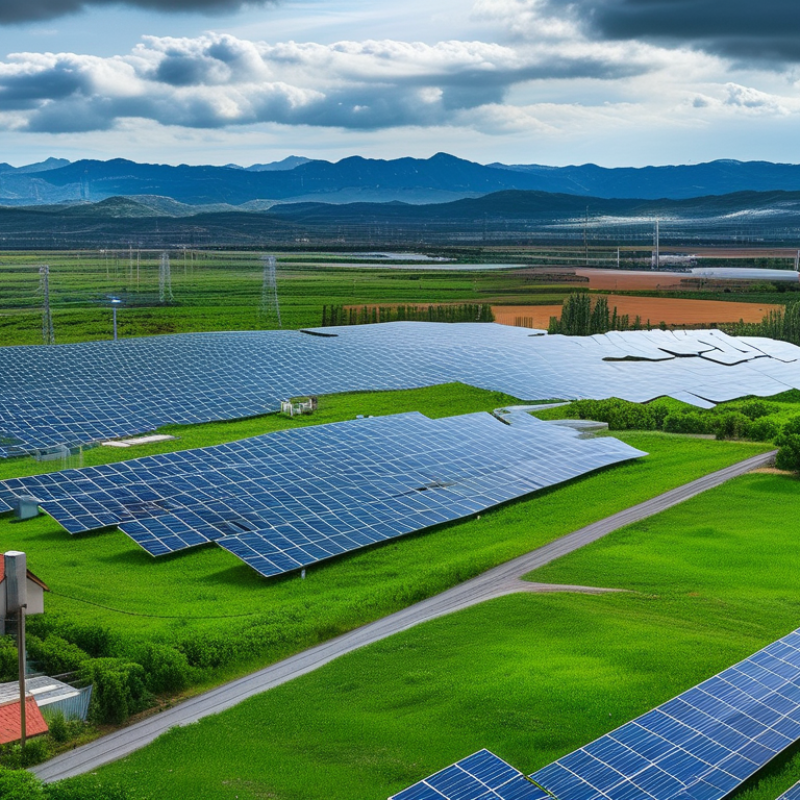
Stand beside a rooftop array at noon, and sunlight becomes electricity without smoke or moving fuel. Solar power begins with photons, the energy particles in sunlight. Photovoltaic cells absorb these photons and release electrons. An internal electric field pushes the electrons in one direction, creating direct current. An inverter then changes it into alternating current for household appliances. It sounds simple. The physics is not.
Solar panels produce more electricity under strong, unobstructed sunlight, but they still work on cloudy days. Output changes with season, panel angle, temperature, and dust. Battery storage can save excess electricity for evening use, while grids can balance supply from different regions. Solar thermal systems work differently. They use sunlight to heat water or another fluid, sometimes producing steam for a turbine. Most small installations today use photovoltaic technology.
The scale is already significant. IRENA’s Renewable Capacity Statistics 2024 reported about 1,419 gigawatts of global solar capacity at the end of 2023. Solar represented roughly three-quarters of new renewable capacity added that year. The International Energy Agency also expects solar PV to lead renewable growth through 2028. These figures show momentum, not perfection. Manufacturing requires minerals, land, water, and careful recycling plans. A panel is clean during operation, yet its full environmental story begins before installation. That part deserves more honest attention.
Why Is Solar Power Becoming More Popular Worldwide?
The Main Reasons for Solar Power’s Global Growth
Solar power is growing because sunlight is widely available and fuel costs can change suddenly. A rooftop system turns sunlight into electricity without burning coal, oil, or gas. This can reduce household emissions and provide more predictable energy costs. Prices for panels and batteries have also fallen in many markets, making projects easier to finance.
Government policies are another major driver. Tax credits, rebates, auctions, and simpler connection rules can reduce the initial burden. In rural areas, small solar systems can support lights, water pumps, clinics, and phone charging. They may work where extending a large power grid would take years. That practical value matters.
Not every project succeeds. Shaded roofs, weak wiring, dust, storms, and poor maintenance can reduce output. A careful installer checks the roof angle, local weather, and future electricity demand before recommending equipment. Independent performance data is more useful than impressive advertising. Storage also remains expensive for many families, especially where financing is limited. I have seen people focus on panel capacity while overlooking cleaning access and battery replacement costs. That mistake can make a promising system disappointing. Solar growth is real, but it still depends on honest planning, reliable installers, fair policies, and realistic expectations.
Global installed solar photovoltaic capacity increased rapidly from 2014 to 2023, driven by falling technology costs, supportive policies, improved energy security, and the scalability of solar systems.
Global installed solar photovoltaic capacity, 2014–2023, in gigawatts (GW). Source: International Renewable Energy Agency (IRENA), Renewable Capacity Statistics 2024.
Solar power is becoming more popular because it can improve daily life while reducing environmental pressure. Rooftop panels turn sunlight into electricity without producing smoke during operation. On a clear morning, a small home system can power lights, a refrigerator, and a water pump.
The benefits reach beyond household savings. Solar projects can create skilled jobs in installation, maintenance, and electrical design. In remote communities, small solar systems may support clinics, classrooms, and phone charging without extending large power lines. Cleaner electricity can also reduce air pollution near busy cities. Energy researchers often connect this change with lower greenhouse gas emissions, especially when solar replaces coal or oil-based generation.
Still, solar energy is not spotless. Manufacturing panels requires minerals, water, and industrial energy. Old equipment also needs careful recycling, which many regions are still developing. Solar output changes with clouds, seasons, and nighttime, so batteries or other energy sources remain important. A field covered with panels may also compete with food production or wildlife habitat. These limits deserve honest attention.
I find the technology hopeful, but not magical. Good planning matters. Panels should face suitable sunlight, while local communities should help decide where projects belong. At sunset, the panels go quiet, and the wider energy system must keep working.
Why Is Solar Power Becoming More Popular Worldwide?
Technological Advances Making Solar Power More Accessible
Solar power is becoming more popular because modern technology lowers costs and simplifies installation. Newer silicon cells capture more sunlight from smaller roof areas. Bifacial panels can also collect reflected light from bright surfaces below. That matters in crowded cities. Flexible designs may fit balconies, sheds, and uneven rooftops. Solar systems are no longer limited to large, open fields.
Smarter inverters now monitor electricity production throughout the day. Homeowners can see performance changes through simple digital dashboards. Battery improvements also store extra energy for evening cooking, lighting, or charging. This reduces dependence on the grid during short interruptions. However, batteries remain expensive in many regions. Their manufacturing and recycling processes still need careful improvement. Progress is real, but it is not perfect.
Tips: Check your roof’s shade during different seasons. Ask a qualified installer for a written energy estimate. Compare panel efficiency, warranty terms, maintenance needs, and battery costs. Do not judge a system only by its advertised capacity. Local weather, roof direction, dust, and temperature can change actual results. A small system may be wiser than an oversized one. Professional inspection helps identify weak wiring, poor ventilation, or unsuitable mounting surfaces before installation.
Solar power is becoming more popular worldwide, but wider adoption remains uneven. In many regions, panels produce strong midday electricity, yet output falls sharply after sunset. Batteries can bridge that gap, but their purchase and replacement costs remain difficult for many households. Cloudy weeks also expose a weakness that optimistic advertisements sometimes overlook.
Grid connection creates another practical barrier. A rural community may have strong sunlight but weak transmission lines. Adding cables, transformers, and storage can take years. Permits may involve several agencies, delaying projects before construction begins. Skilled installers are not always available locally. Poorly designed systems can reduce rooftop output, increase maintenance needs, or fail earlier than expected. Small details matter.
Materials and land use also deserve careful attention. Large solar farms can compete with agriculture or disturb habitats without careful planning. Recycling old panels is improving, but collection systems remain limited in some countries. Real installations must account for dust, heat, shading, and seasonal changes. Perfect laboratory results rarely match everyday conditions. Public trust suffers when savings are promised too confidently. Clear contracts, independent inspections, and accessible repair support can make adoption safer. Solar energy is promising, but affordability, reliability, and responsible planning still need honest work.
| Dimension | Measured Data or Fact | Why It Matters | Reference Period | Source |
|---|---|---|---|---|
| Global solar PV capacity | Approximately 1,419 GW of solar photovoltaic capacity was installed worldwide. | Large-scale deployment shows that solar has become a mainstream electricity technology. | End of 2023 | International Renewable Energy Agency |
| Annual solar capacity additions | Solar power added about 345 GW of new capacity globally in 2023. | Rapid annual growth is increasing solar’s contribution to new electricity supply. | 2023 | International Renewable Energy Agency |
| Share of global renewable expansion | Solar accounted for approximately 73% of worldwide renewable capacity additions in 2023. | Solar was the largest contributor to the expansion of renewable power capacity. | 2023 | International Renewable Energy Agency |
| Long-term cost reduction | The global weighted-average levelized cost of electricity from utility-scale solar PV fell by about 90% between 2010 and 2023. | Lower generation costs have improved the economic case for solar projects. | 2010–2023 | International Renewable Energy Agency |
| Operational emissions | Solar PV produces no direct carbon dioxide emissions during electricity generation. | It can reduce dependence on fossil-fuel generation when supported by suitable grids and storage. | Technology characteristic | Intergovernmental Panel on Climate Change |
| Variability of output | Solar generation varies with daylight, weather, season, and geographic location; output is zero at night. | Flexible demand, energy storage, transmission, and complementary generation are needed for reliable supply. | System characteristic | International Energy Agency |
| Grid investment requirement | Global annual investment in electricity grids needs to rise from about USD 400 billion in 2022 to more than USD 600 billion by 2030 in the stated transition scenario. | Insufficient grid capacity can delay solar connections and limit the use of new renewable electricity. | 2022–2030 | International Energy Agency |
| Energy storage deployment | The world needs roughly 1,500 GW of energy storage capacity by 2030 in the International Energy Agency’s net-zero pathway, compared with about 230 GW in 2022. | Storage can shift solar electricity from periods of high production to periods of higher demand. | 2022–2030 | International Energy Agency |
| Land-use considerations | Utility-scale solar projects require land for modules, access roads, substations, and related infrastructure. | Planning, community consultation, brownfield development, and dual-use projects can reduce conflicts over land. | Deployment consideration | Intergovernmental Panel on Climate Change |
| Material and supply-chain exposure | Solar manufacturing depends on energy-intensive processing and international supply chains for materials, components, and equipment. | Supply concentration, trade restrictions, transport disruptions, and price volatility can affect project costs and schedules. | Ongoing challenge | International Energy Agency |
| End-of-life management | Solar modules generally have operating lifetimes of about 25–30 years, after which recycling, reuse, or disposal is required. | Effective recycling systems can recover materials and reduce future waste-management pressure. | Typical module lifetime | International Renewable Energy Agency |
| Access to finance | Higher interest rates increase the upfront financing cost of capital-intensive solar projects, even when technology costs are falling. | Stable regulation, transparent permitting, and lower-cost finance are especially important in emerging markets. | Ongoing challenge | International Energy Agency |
Note: Capacity figures are reported in gigawatts (GW). Cost, investment, and deployment figures are rounded for readability and refer to the cited period or scenario.
Photovoltaic cells absorb sunlight particles called photons. This releases electrons and creates direct current. An inverter changes it into usable alternating current.
Yes, but output usually falls. Clouds, dust, seasons, panel angle, and temperature all affect production. Not always predictable.
A battery can store surplus electricity for evening lights or cooking. The grid can also balance supply when local production changes.
Photovoltaic systems produce electricity directly from sunlight. Solar thermal systems heat water or another fluid, sometimes creating steam for a turbine.
Sunlight is widely available, and fuel prices can change suddenly. Falling equipment costs and supportive policies also reduce financial pressure.
Small systems can provide lighting, water pumping, clinic power, and phone charging. They may serve remote places faster than a large grid extension.
Check roof shade in different seasons, roof direction, wiring, ventilation, dust, and mounting strength. Ask for a written energy estimate. Check cleaning access.
Not completely. They produce electricity without smoke during operation, but manufacturing uses minerals, land, water, and energy. Recycling plans still need improvement.
No. A grid-connected system may work without batteries. Storage helps during evening use or short interruptions, but replacement costs can be significant.
People often focus only on advertised panel capacity. They may overlook shade, maintenance, battery costs, or local weather. A smaller system may be wiser.
Solar power is energy generated from sunlight, usually through solar panels that convert light into electricity. Why is solar power becoming more popular? Many countries and households are choosing it because sunlight is widely available, fuel costs are low after installation, and solar energy can reduce dependence on traditional energy sources. It also supports energy security by allowing communities to produce some of their own electricity.
Solar energy benefits the environment and society by producing electricity with very low emissions during operation, helping reduce air pollution and greenhouse gases. Advances in panel efficiency, battery storage, manufacturing, and installation methods are making solar systems more affordable and practical for homes, businesses, and remote areas. However, wider adoption still faces challenges, including high initial costs, limited sunlight at certain times, land requirements, recycling concerns, and the need for stronger electricity networks. Continued research, supportive policies, and improved storage could help solar power become a more reliable part of the global energy system.

Stove Solar